Launch Your Suite Life with Confidence
Stepping into your own independent salon suite in Greenville is a big move. No more sharing a backbar you do not control, no more guessing what your paycheck will look like. You set the prices, the schedule, and the experience from start to finish. That freedom feels amazing, but it also comes with new details to manage.
Without a clear checklist, it is easy to miss something small that turns into a big problem later. A license that is not posted, the wrong insurance policy, or a messy setup can slow down your first month of income. With a little planning, you can walk into your suite ready to take guests, collect payments, and grow from day one.
In this guide, we walk through what Greenville stylists need for move-in and the first 30 days: legal and licensing basics, smart insurance choices, suite setup, and a simple plan for building loyalty right away.
Lock in Your Legal and Licensing Essentials
Before you bring in your color bowls or your towel warmer, get your legal base in order. This protects your business and keeps stress low during inspections or surprise checks.
Start with your professional license:
- Confirm your South Carolina license is active and current
- Check that your name and information are correct
- Plan where you will post it clearly inside your suite
If you change your business name or address, follow the state steps to update your records. Do not tuck your license away in a drawer. Keep it easy to see so clients and inspectors know you are working by the rules.
Next, pick a simple business structure that fits how you want to work. Many new suite owners choose between:
- Sole proprietor
- Single-member LLC
You may also want:
- An EIN if you prefer not to use your Social Security number
- A DBA if you are working under a brand name that is different from your legal name
- A separate business bank account so your money is clean and organized
Set up basic bookkeeping early. Even a simple app or spreadsheet for tracking income, tips, product sales, and expenses will help at tax time.
Then look at local rules that affect an independent salon suite in Greenville. Make time to read the sanitation and safety standards for your license type. Think through:
- Where and how you store chemicals and retail
- How you label containers
- What you need ready for routine inspections
- Any rules about signs or postings inside the building
To keep everything in one place, build a quick compliance folder. Make both a digital and a printed version with:
- Your license
- Business registration and any LLC or DBA paperwork
- Tax IDs
- Basic policies such as cancellation and late arrival
When someone asks for proof, you can show it in seconds instead of digging through emails.
Protect Your Income with Smart Insurance Choices
Once your paperwork is set, it is time to protect your income. One surprise incident can wipe out a lot of hard work if you are not covered the right way.
At a minimum, most independent stylists look into:
- Professional liability, for services that do not go as planned
- General liability, for slips, trips, and falls in your space
- Property coverage, for your tools, furniture, and retail inside the suite
Do not guess about what is covered by the building. Ask clear questions so you know the line between building coverage and your own policy. Often, the building policy focuses on the structure and shared areas. Your personal tools, your chair, and your retail shelves are usually your job to protect.
If your income depends on being behind the chair most days, think about what happens if you have to close for a bit. You may want to ask about options for:
- Business interruption coverage
- Lost income related to accidents or disasters
- Extra riders for expensive tools or specialty equipment
Even if you start solo, plan for growth. If you add an assistant or someone who rents a chair inside your suite later, you might need:
- Workers' compensation coverage
- Updated policies that include more people in your space
- A simple system for writing down any incidents
Set up an incident report template from day one. Keep it ready for things like client falls, reactions, or any injury. The habit of documenting now will help you stay calm and clear if something ever happens.
Design a Suite That Works Harder Than You Do
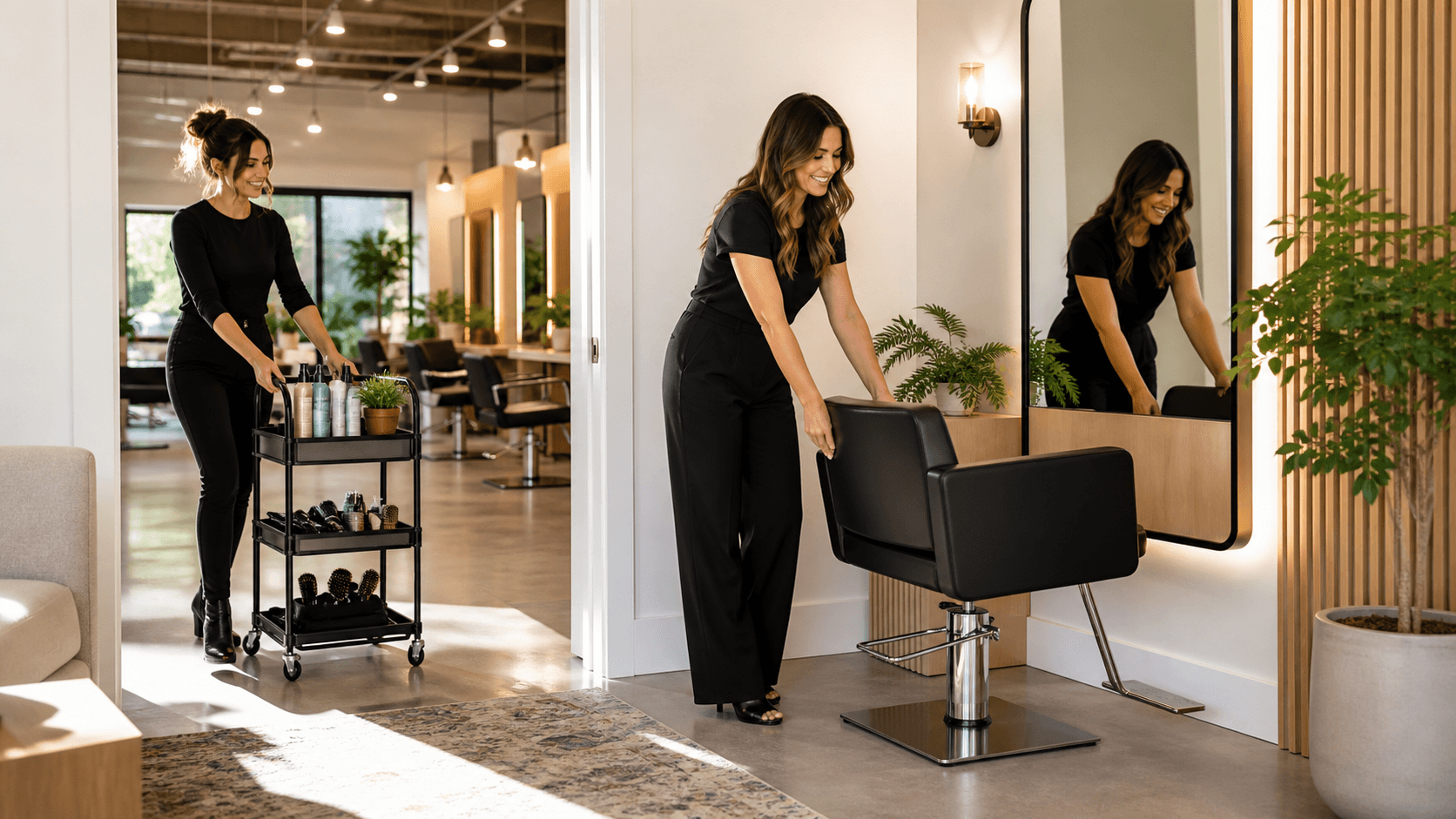
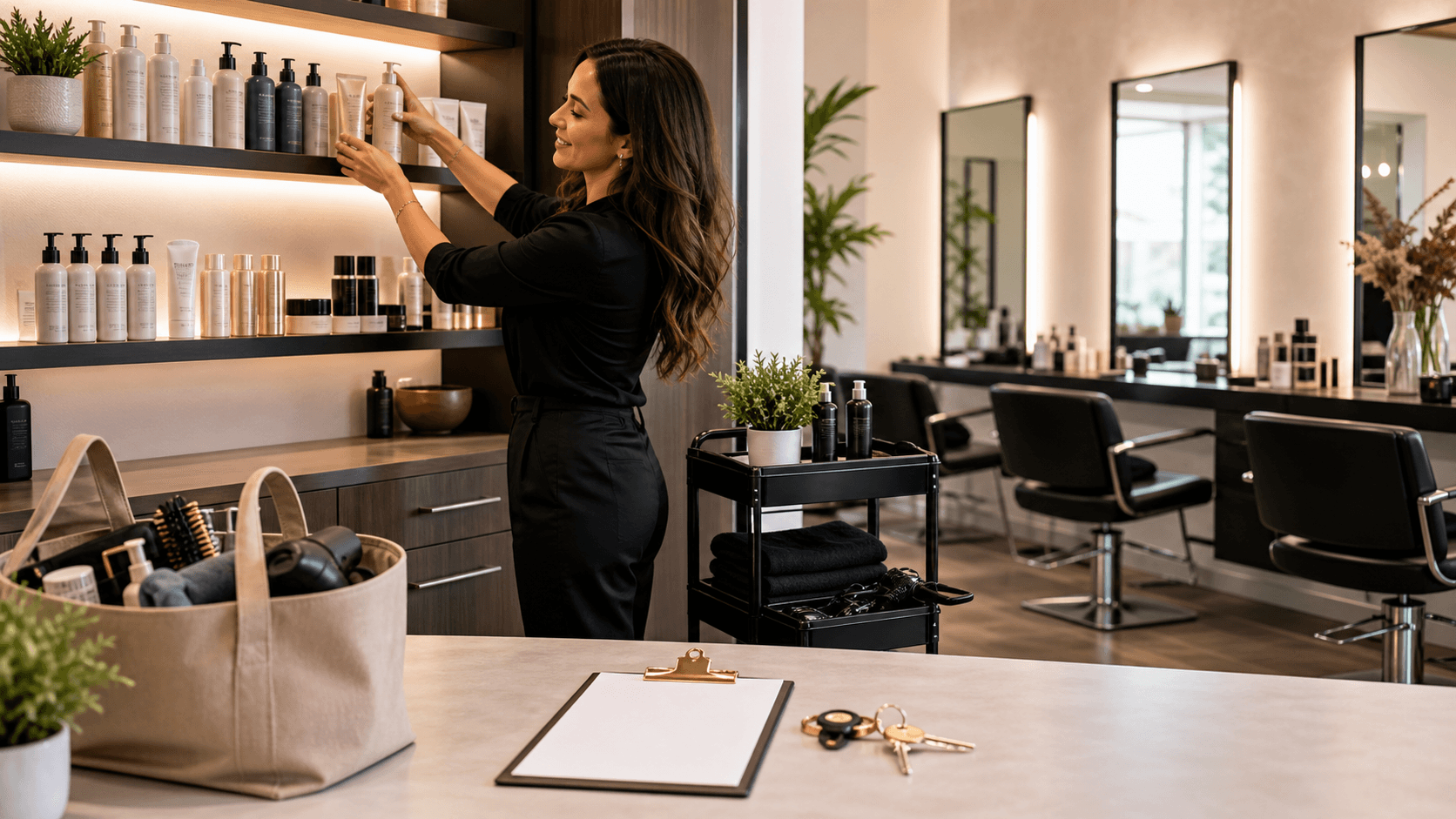
Now for the fun part, making your suite work like a tiny, smart salon. A good layout helps you move quickly, keep guests comfortable, and sell more of the services and products you love.
Think in zones, not just furniture:
- Service zone for cutting, styling, and finishing
- Color or treatment zone with easy access to water and storage
- Checkout zone where payment, rebooking, and retail live
- Photo and content zone with great lighting and a clean background
Ask yourself, can I stand in one spot and reach everything I need for this step of the service? If the answer is no, adjust your layout before you start taking guests.
When you invest in furnishings, put function first:
- A supportive stylist chair
- A shampoo unit that saves your back and your client's neck
- Strong, flattering lighting
- Storage that keeps clutter out of sight
After that, bring in decor that supports your brand. This might be calm neutrals, bold colors, greenery, or simple artwork. Small comfort touches, like a place for guests to charge a phone or a small drink station, can make a big impact.
Content matters too. Choose a neutral wall or corner with good light as your photo spot. Keep a ring light or soft box ready and build the habit of:
- Before photos
- After photos
- Short videos of styling or detail work
These images feed your social media and your Google Business Profile without extra work.
Finally, map the client journey step by step:
- How you greet them when they arrive
- Where they put bags and coats
- How you do the consultation
- What they see and feel during the service
- How you present retail and rebooking at the end
Set up your tools, signs, and digital systems so the same smooth flow happens for every guest.
Nail Your First 30 Days in Business
Strong first weeks come from planning before you move in. Two to four weeks before opening your independent salon suite in Greenville, start pre-launch marketing:
- Post your new location on social media
- Email or text your existing clients with clear directions
- Update any online booking tools with your new address
- Create or update your Google Business Profile
Then follow a simple week-by-week focus.
Week 1, keep it soft and flexible. Treat it like a test run:
- Fine-tune timing for each service
- Notice where you feel rushed or bored
- Fix small setup issues
- Ask trusted clients for honest feedback
Week 2, shift to growth:
- Launch a referral incentive
- Start asking every happy guest for a Google review
- Share behind-the-scenes content from inside your suite
Week 3, adjust and connect:
- Look at your most popular times and services
- Shift your hours to match actual demand
- Plan a small open house or client appreciation moment
Week 4, check the numbers and set goals:
- Total revenue
- Rebooking rate
- Retail sales
- No-shows and late cancels
Use what you see to set clear targets for the next month.
Retention habits matter from day one. Aim to:
- Rebook every guest before they leave
- Use automatic reminders
- Send a quick follow-up after big changes or color work
- Offer simple loyalty or pre-book perks
Those early guests can turn into your long-term base if you take care of them with intention.
Step Into Ownership with a Partner in Your Corner
Before you sign anything or bring in your first box, walk through this checklist. Make sure your license details, business structure, insurance, suite layout, and 30-day plan all feel clear and simple. A little time now saves a lot of stress once the doors open and people are waiting in your chair.
At MIX Salon Studios in Greenville, we see how much easier ownership feels when stylists have support, education, and a like-minded community around them. When you are not trying to figure out every detail alone, you can focus on what you do best: serving guests, building your book, and growing into the independent owner you always wanted to be.
Unlock Your Own Luxury Salon Suite Today
If you are ready to grow your clientele on your terms, MIX Salon Studios can provide the professional space you need. Explore our independent salon suite in Greenville to see how our fully equipped studios support serious beauty professionals. We will walk you through availability, pricing, and how to make your move seamless. Take the next step toward controlling your schedule and your income by reaching out to our team today.